

(CANAL+ Prize and Audience Prize – Clermont-Ferrand 2025)

An absurd tragedy set in a repressive society where kissing is punishable by death and people pay by receiving slaps in the face. Angine, an unhappy woman, engages in compulsive shopping in a department store and becomes captivated by a naïve salesgirl. Despite the ban on kissing her, the two grow closer, arousing the suspicion of a jealous coworker.

The film will be screened at Palazzo Grassi as part of a selection of films from the Schermo dell’arte festival.

Full film available for free on CANAL+

Réalisation / Directed by
Natalie Musteata
Alexandre Singh

Avec / Cast
Zar Amir Ebrahimi
Luàna Bajrami
Vicky Krieps
Aurélie Boquien
Nicolas Bouchaud
Mitchell Jean
Mustapha Abourachid
Thibault De Lussy
Lucile Jaillant
Christophe Grundmann
Sybille Blouin
Rodolphe Meunier

Musique / Music
Bobak Lotfipour

Scénario / Screenplay
Natalie Musteata
Alexandre Singh

Populated by impalpable, fragile, and unsettling presences, Villa Bernasconi presents the exhibition Stitches: A Haunted House and Other Ghost Stories, curated by Collectif Détente. Continuing the curatorial project Stitches initiated in 2020, the exhibition explores the spectral potential of textiles.
By clothing the invisible and giving it form, fabric becomes a messenger between worlds, carrying suspended stories and forgotten memories.

At the threshold of the perceptible, the exhibition questions what the figure of the ghost and its dwelling reveal within contemporary artistic practices. Witnesses to concealed legacies, collective fears, and intimate narratives, the works on view give shape to what cannot—or must not—be seen. With tenderness, mischief, and unease, they reveal the haunting that inhabits domestic objects, living spaces, everyday gestures, and social structures.
In dialogue with the architecture of Villa Bernasconi, the house itself becomes a haunted subject, allowing the voices and absent beings to surface—those “others” with whom we coexist, who follow us, or accompany us.

Stitches: A Haunted House and Other Ghost Stories
Serge Comte, Vidya Gastaldon, Christophe Terpent & Jean-Michel Wicker / Ryan Gander / Dorota Gawęda & Eglė Kulbokaitė / Gotscho / Gregory Tara Hari / Sonia Kacem / Léa Katharina Meier / Meret Oppenheim / Benoît Piéron / Nina Rieben / Li Tavor / Sandar Tun Tun / Claire van Lubeek / Latefa Wiersch, and a film with Heidi Bucher

Exhibition from January 21 to March 22, 2026
Opening hours:
Wednesday – Sunday
2 pm – 6 pm

Further information

Ulla von Brandeburg – “It Has a Golden Sun and an Elderly Grey Moon” Film super-16-mm, colour, sound, 22 min 25 sec.

Le Grand Café is participating in the Trajectoires #9 dance festival* for the third consecutive year.
The art center is presenting three artistic creations at the crossroads of dance and visual arts, featuring tableaux vivants, body-objects, and memory theater.

It has a Golden Sun and an Elderly Grey Moon
Ulla von Brandenburg
2016
Film, duration 22 min 25 sec
Looped from 3pm to 6pm

Further information

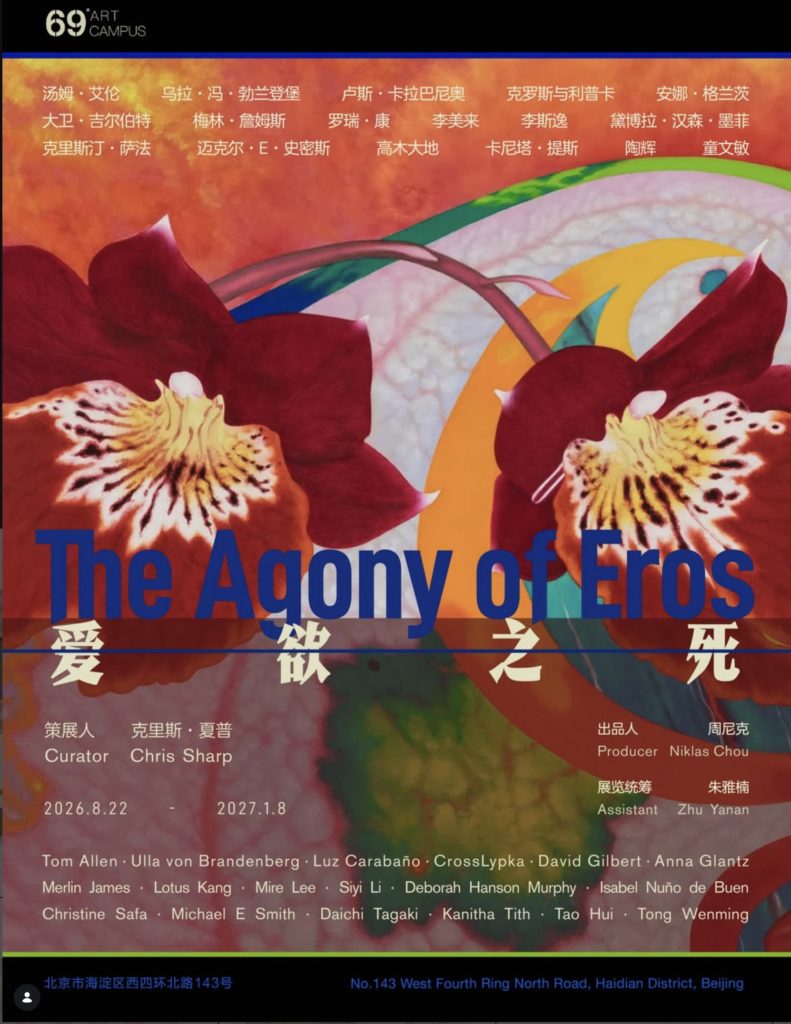
Group show with: Caroline Achaintre, Zuzanna Bartoszek, Christa Dichgans, Nan Goldin, Christian Jankowski, Angelika Loderer, Sarah Lucas, Travis MacDonald, Dana Schutz, Emily Mae Smith, Gert & Uwe Tobias, Anna Virnich, Cosima zu Knyphausen

Further information

Space as the First Gesture

The SCÉNO festival welcomes artists who invent forms, open up the stage, and, through their gestures, sketch out new perspectives. A set is never neutral: it already contains, in negative, a play yet to come. This is the vision carried by SCÉNO.

The festival invites scenographers who are also directors, visual artists, and choreographers. What do they have in common? The stage — which they constantly reinvent, each in their own way.

On the program: four performances, one installation, and a series of conversations conceived as dialogues to share their approaches. There will also “scenographic quarter-hours” proposed by ENSATT students, as well as post-show discussions. SCÉNO proposes to approach theatre from its very foundations: where everything begins.

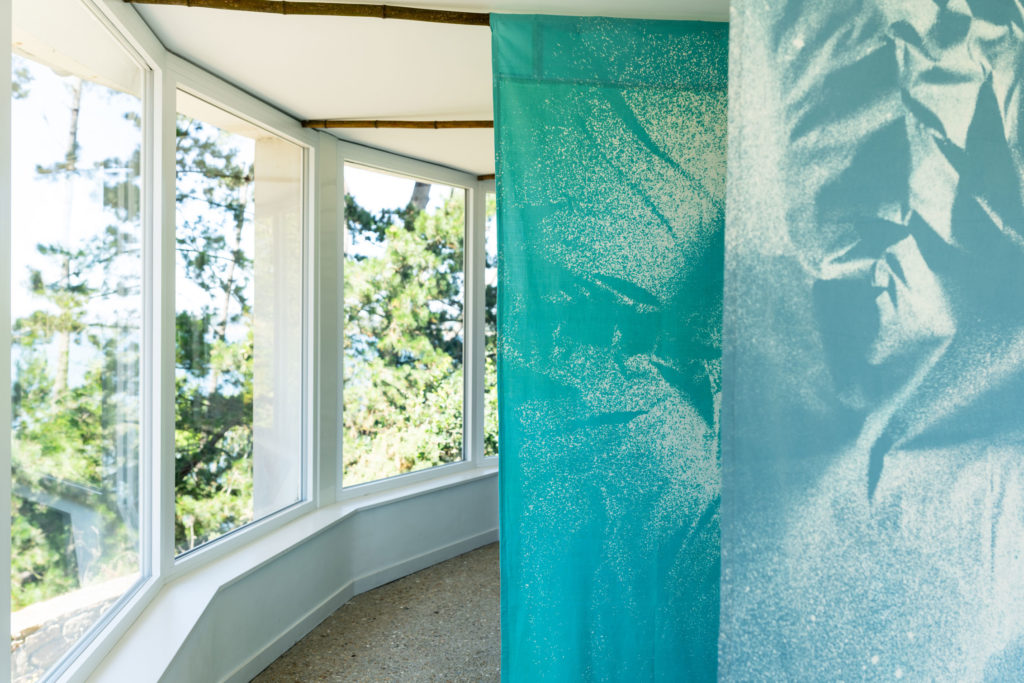
In Das Was Ist (“What Is”), Ulla von Brandenburg makes the curtain—an emblematic object of the theatre—the core of her installation. Pierced by a circular opening, each curtain becomes both a passage and a viewpoint.

By moving through these openings, the audience is immersed in successive fields of vivid color. The reverse side of the set reveals another kind of beauty: that of the traces left by paint rollers. The work thus becomes a promise of theatre, offering in a single gesture both access to fiction and the exposure of its making.

“I use fabrics to create spaces in which one can imagine being elsewhere, so to speak falling into other worlds. In a space where curtains are suspended, the separation between inside and outside, or between different worlds, becomes blurred. And this blurring leads one to question where one is.”
— Ulla von Brandenburg

In partnership with Abattoirs, Musée FRAC Occitanie Toulouse.

Further information

Looking at the landscape, what could be more natural? I observe and impressions flood my mind. In capturing the landscape, something happens that is not simply a matter of perspective, but rather a dreamlike representation of the scene and the mystery that inhabits it. Man is faced with himself, searching for meaning, and images flood his consciousness. The works are situated there, probing nature and its poetic power, the reality and authenticity of an experience, history and its traces.

With: Sébastien Arrighi, Thibault Brunet, Geert Goiris, Anabelle Hulaut, Linh Jay, Fiorenza Menini, Florence Paradéis

— En partenariat avec la Maison gothique – Maison du Tourisme et du Patrimoine

Further information

Corentin Grossmann, Miaou, 2018. Céramique, engobe / Ceramic, engobe
43 × 60 × 168 cm (16 ⅞ × 23 ⅝ × 6 ¼ inches). Courtesy the Artist and Art : Concept, Paris.

The exhibition Les Animaux ne portent pas de chaussures, curated by Anne-Laure Lestage, offers a sensitive way to engage with living beings. Sixteen works across painting, drawing, installation, sculpture, video and tapestry form a gentle, sometimes uncanny bestiary. The artists blur the line between human and animal, encouraging visitors to look differently and build their own story. At a time when debates over the protection or exploitation of nature are intensifying, the exhibition points toward a more respectful and balanced relationship with the living world.

Further information

Ulla von Brandenburg’s multifaceted and multi-layered work is characterised by a multimedia practice that finds its characteristic expression in expansive, site-specific installations. The forms of expression and methods of theatre are an important starting point: the artist creates stage-like settings from architectural set pieces and curtains, in which films, drawings, sculptural objects and textile works enter into a complex interplay with dance, performance and song. The boundaries between inside and outside, reality and illusion become blurred. The cultural-historical and philosophical currents of modernism form the frame of reference for von Brandenburg’s works. Diverse references to literature and art history, circus, anthropology and spiritualism, among others, create a dense associative cosmos. Embedded in a loose narrative, her works reflect fundamental conditions of human existence and social coexistence, be it the relationship between the individual and the group or the constitutive significance of role-playing games and rituals.

The exhibition at the Wilhelm-Hack-Museum presents a comprehensive overview of current works from the last five years. In addition, a new work has been created by the artist especially for the presentation in Ludwigshafen, focussing on her examination of the traditions of geometric abstraction. The interplay of body and space, movement and perception is an essential component of Ulla von Brandenburg’s artistic strategy; in this sense, the artist transforms the exhibition space with colours and fabrics into an immersive course that leads visitors into fantastic, sensually tangible spaces of experience and allows them to become part of the staging.

Ulla von Brandenburg, born in Karlsruhe in 1974, lives and works near Paris and in Karlsruhe. From 1995 to 1998, she studied scenography and media art at the University of Arts and Design in Karlsruhe, and from 1998 to 2004, fine art at the University of Fine Arts in Hamburg. Ulla von Brandenburg has been a professor of painting and graphic art at the Academy of Fine Arts Karlsruhe since 2016.

Curator: Dr. Astrid Ihle

Further information

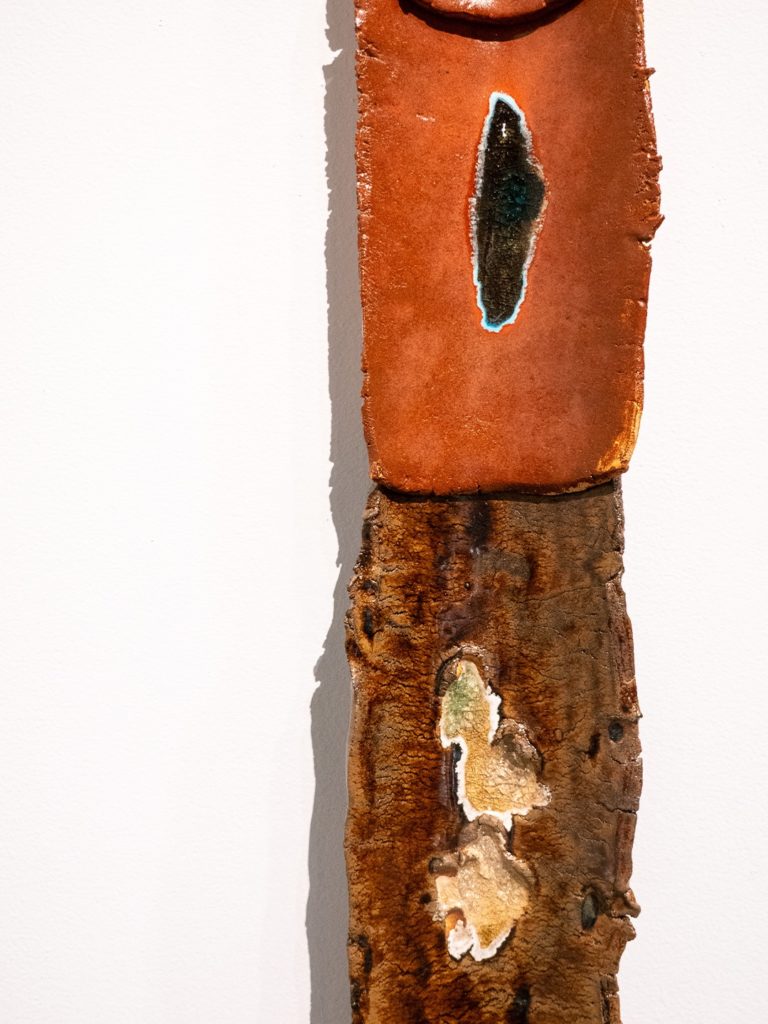
A Line Through Time inserts over 30 metres of handmade drain tile into the ground along Singapore’s Rail Corridor. Typically used for water management, the perforated ceramic lengths were set in consultation with landscape specialists to align with the site’s natural hydrology and land use. Glazed with slip made from Singapore clay, the work ties its material directly to the ground it inhabits.

Sited along a route that was repurposed from colonial railway to an important post-independence transport line, and, later, a public green space, the work attends to how ground and infrastructure co-produce the Corridor. The tile line assimilates into this living landscape, its clay body mirroring the local soil, and its function following existing natural flows. The work exists in conversation with the weather, the soil and the passing of days—what endures is not its form but its ongoing exchange with place.

Vue d’exposition | Installation view Flesh Flowers, Aïshti Foundation, Beirut, 2025.
Courtesy the Artist and Art : Concept, Paris. Collection Aïshti Foundation, Beirut/LB
Photo credit: Stefan Altenberger.
Miryam Haddad, Au bord des regards, 2022
Huile sur toile / Oil on canvas. Diptyque / diptych : 250 × 300 cm (98 ⅜ × 118 ⅛ inches). Photo Romain Darnaud. Collection Aishti Foundation.

Flesh Flowers assembles the work of over seventy artists and more than two hundred pieces from the Tony and Elham Salamé Collection. Borrowing its title from one of Miriam Cahn’s works in the collection, the exhibition delves into the complex intersections of bodies and paint, with a particular focus on the work of women artists in the collection.

This show marks the tenth anniversary of the inauguration of the Aïshti Foundation exhibition space in Beirut, and it is the first major presentation since the Foundation’s programs were interrupted by the recent war.

The works in the exhibition combine abstraction and figuration to complicate relationships between form and content, medium and meaning, subjectivity and otherness. In an era saturated with digital images and disembodied data, these artists simultaneously reassert and question the physical materiality of painting. Each artist approaches the canvas as a site of intense negotiation: between the raw immediacy of the gestural mark and the emergence of recognizable forms; between the tangible presence of the body and its fractured representation in a hyper-mediated society. Screens, pixels, vectors, and networks intersect with anatomies, stains, traces, and fluids in an intense conflation of the carnal with the digital. Abstraction gives way to fleeting suggestions of flesh, or conversely, figurative elements dissolve into fields of pure color, texture, and information.

Further informations